
California Pen Show come and gone, and I think I had the ideal show experience this time around. Here’s what happened.
The Show
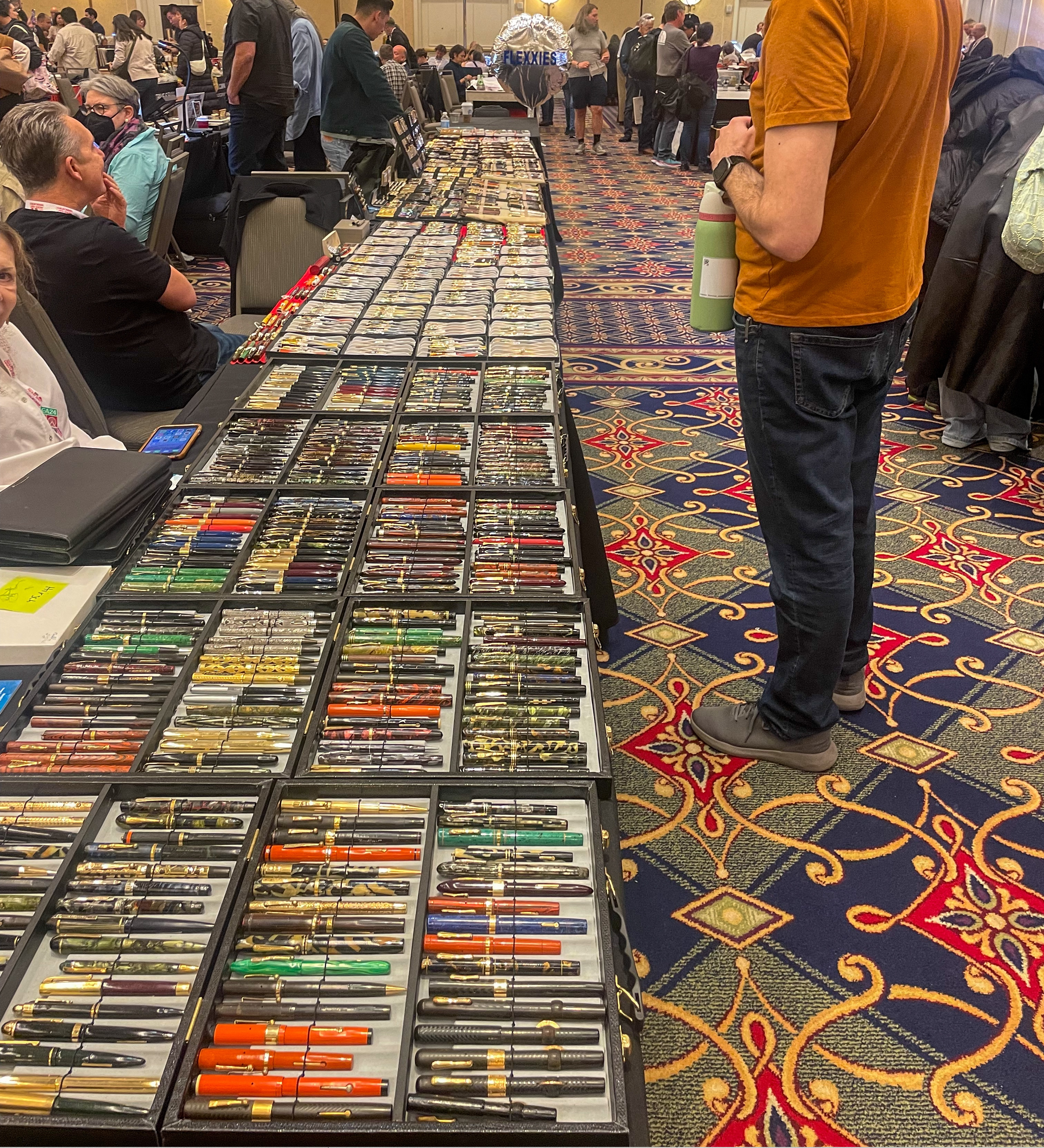
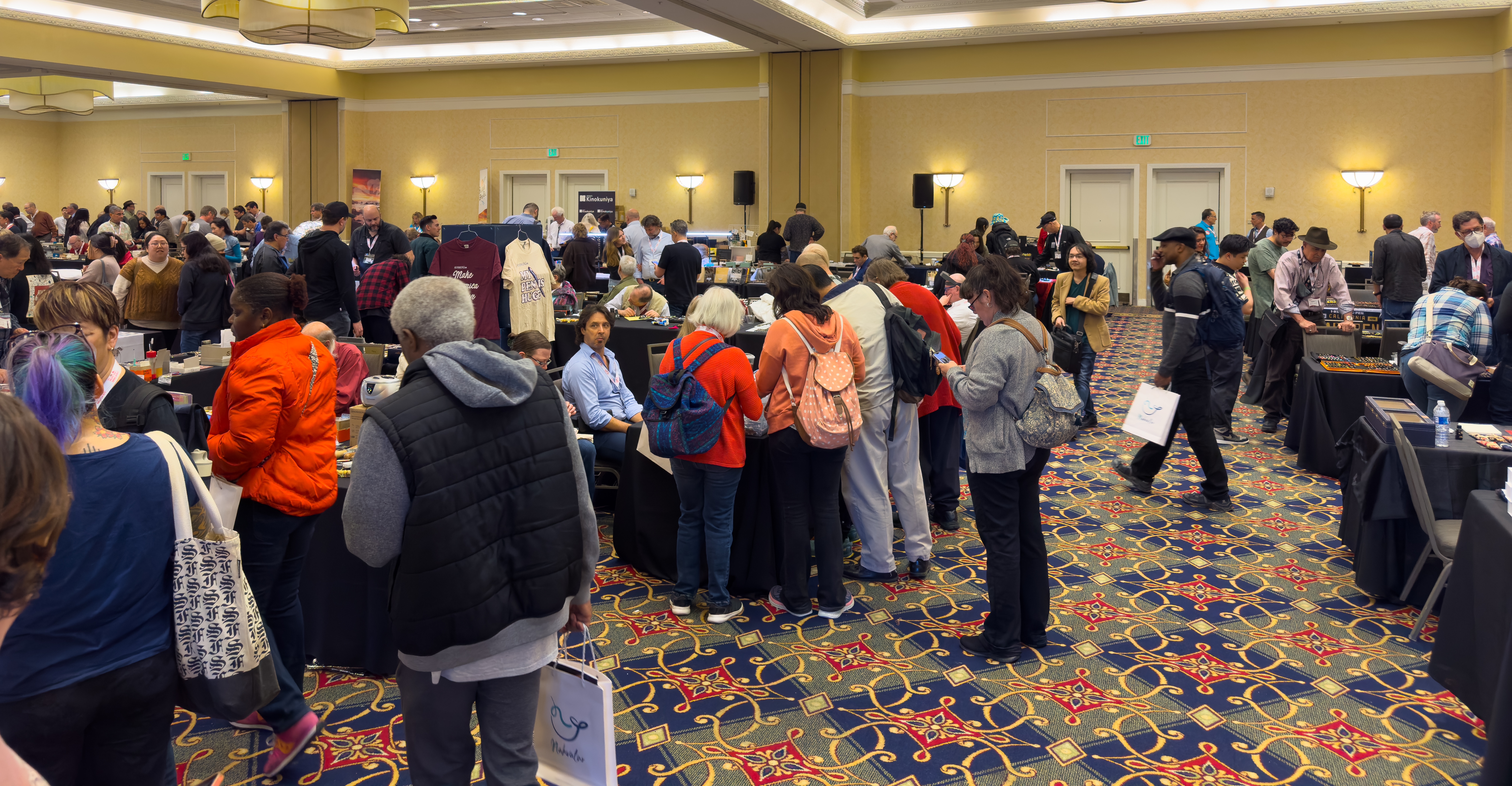
The California Pen Show is now in its second year of operation, and it has a new venue. This year’s event was held in Torrance, which is right outside of Los Angeles and close enough to several major transit hubs for vendors and attendees from all around the world to gather. The show felt bigger than last year, more spacious and a bit less cramped. While I don’t have specs of square footage or the total number of vendors, every table appeared to have ample space for their wares in the main ballroom, as well as the hallway surrounding it. There was the standard mix of shops, makers, and vintage vendors, even a few capital-b Brands like Pilot Corp. and Yafa Brands (the US distributer for brands like Conklin, Monteverde, and others.) All fairly familiar faces for anyone who has been to any of the California-based pen shows in the past. One thing I was particularly delighted to see was a larger turnout of the Plotter and Travelers Company teams. Not only were they situated right inside the first ballroom entrance, they came ready with tables full of leathers, refills, and accessories ready to sell. They also brought their Plotter Customization Station to the show, providing a unique experience for new and existing users of the system who were in attendance.
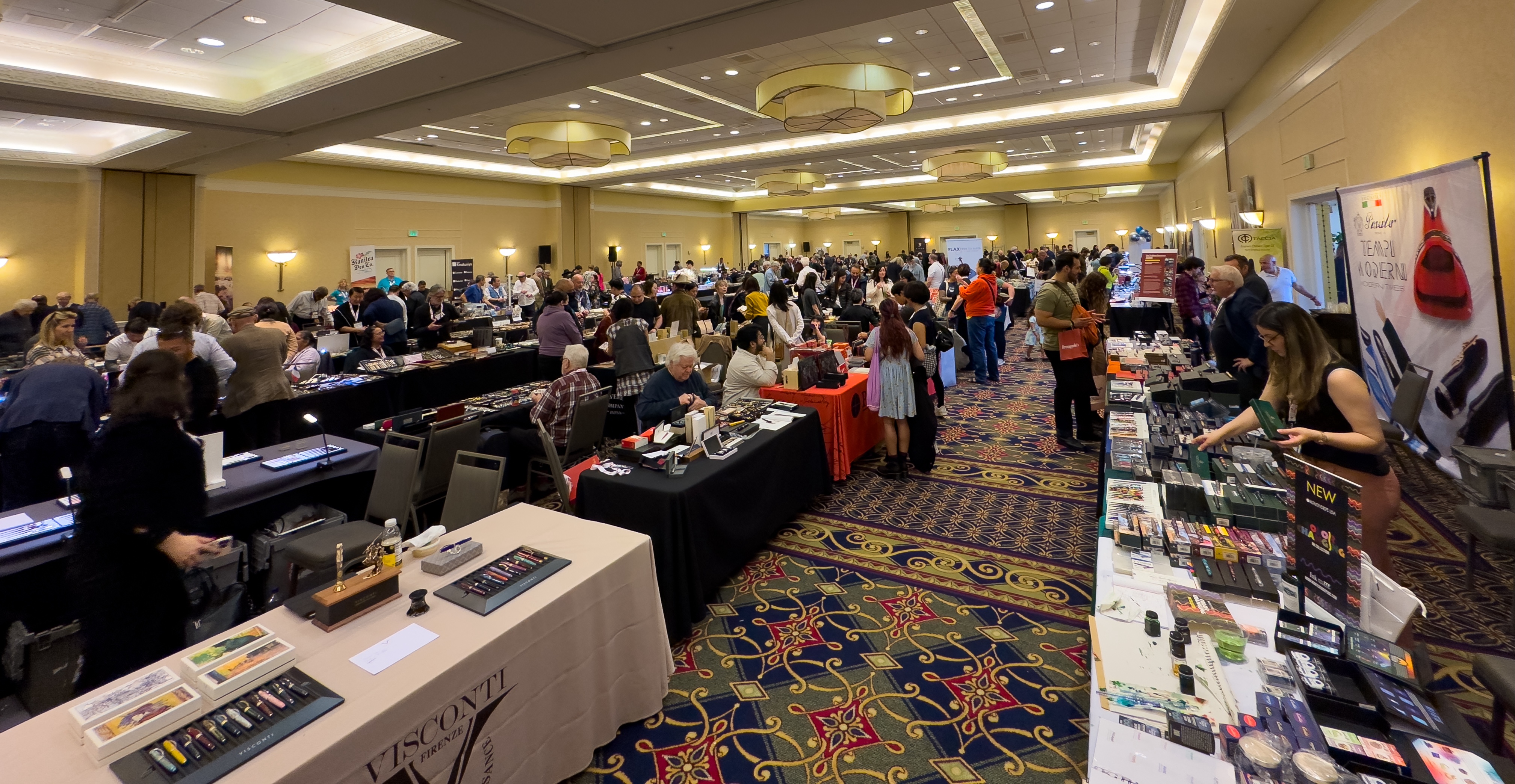
In the past, when attending a show for a single day, I have opted for the Saturday experience. Typically that is the busiest day for any weekend convention and pen shows are no exception. This time we went in on Sunday, arrived shortly after Noon, strolled right through check-in with tickets we pre-purchased online, and were able to peruse the show at our leisure. Saturdays are good if you’re looking for rare or limited edition items, Fridays (I assume) are even better if you can pay the extra admission fees. But Sunday is the day to go to have a nice, low-pressure experience.
The Pickups
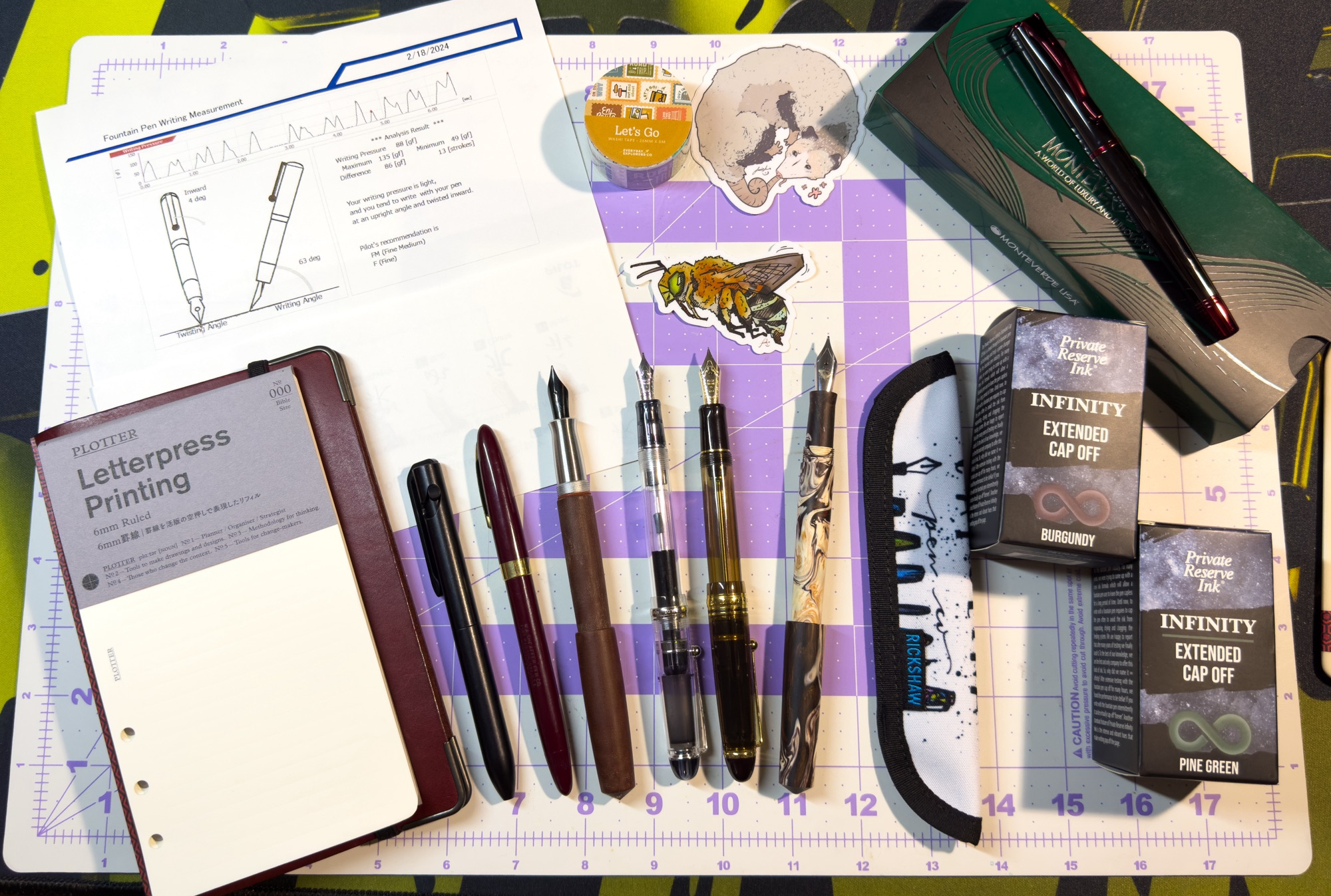
I might not have gone full HAM, but I certainly came home with a full bag. Here’s my haul, in no particular order:
Carolina Pen Company Charleston (Slim?)
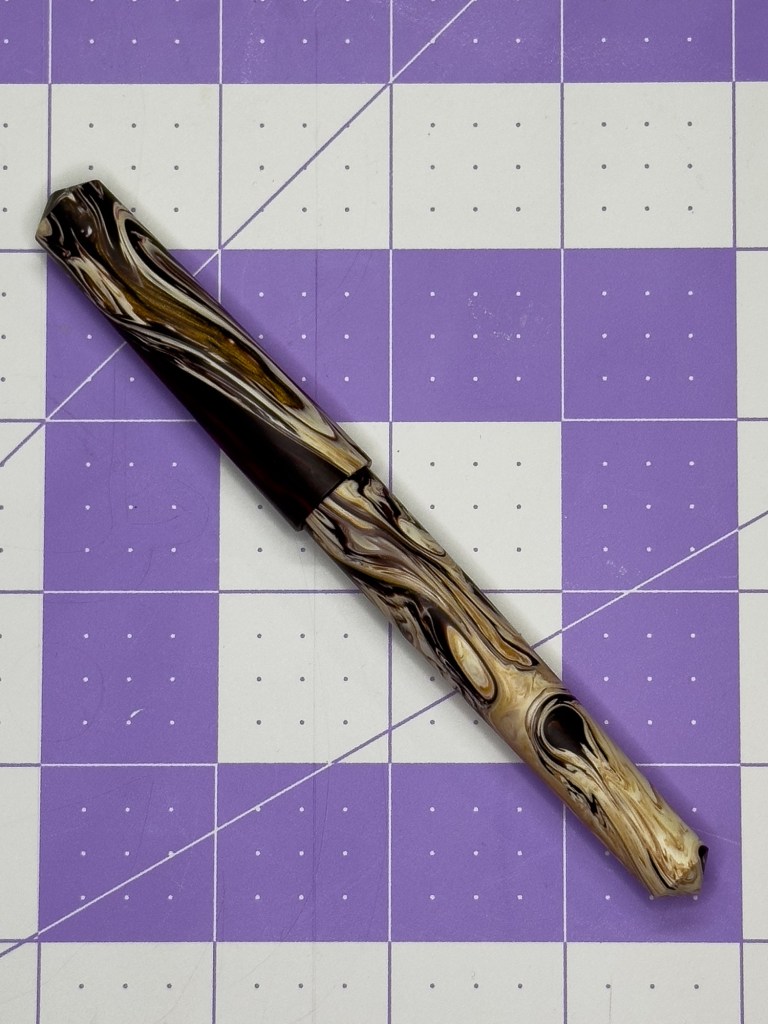
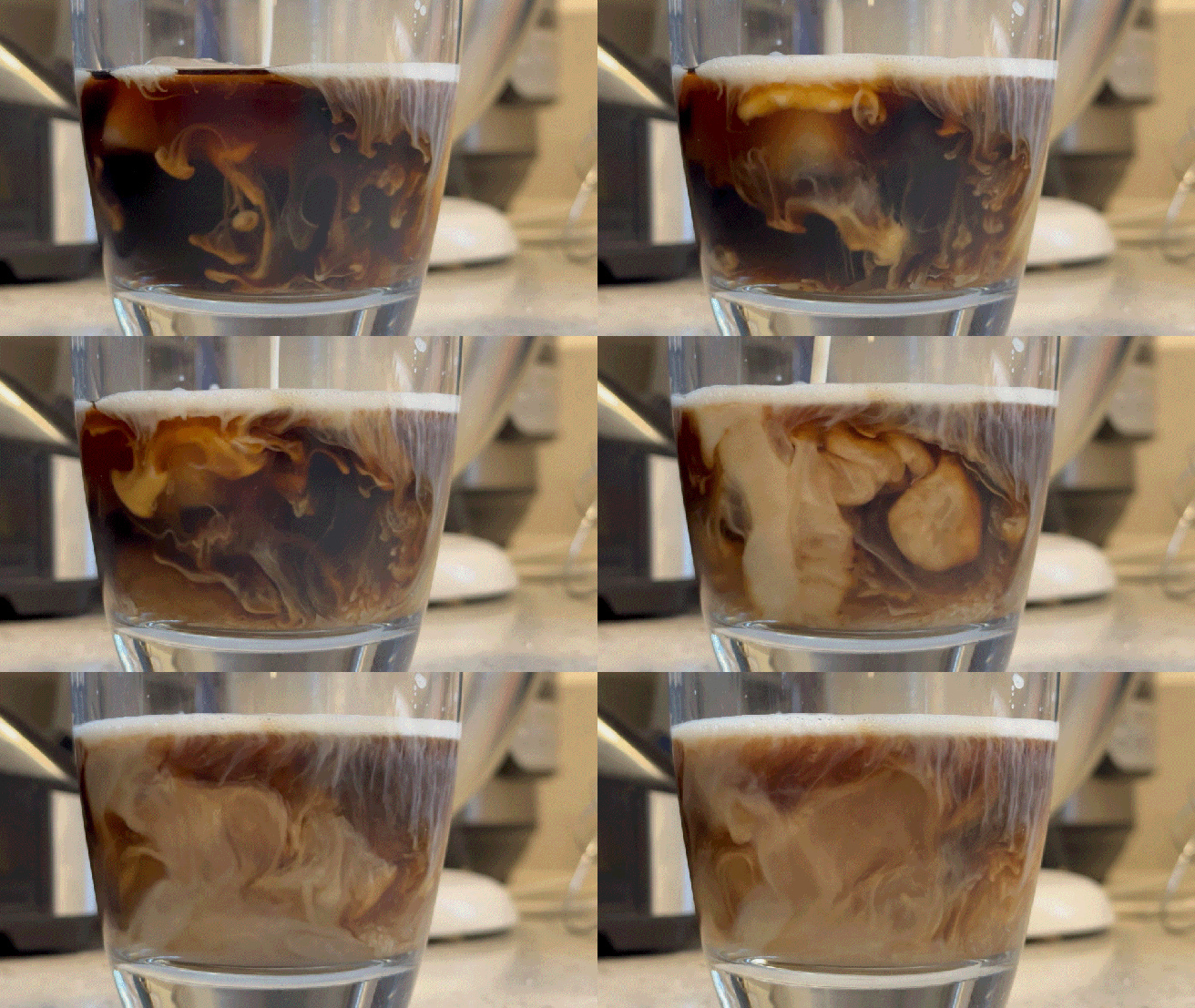
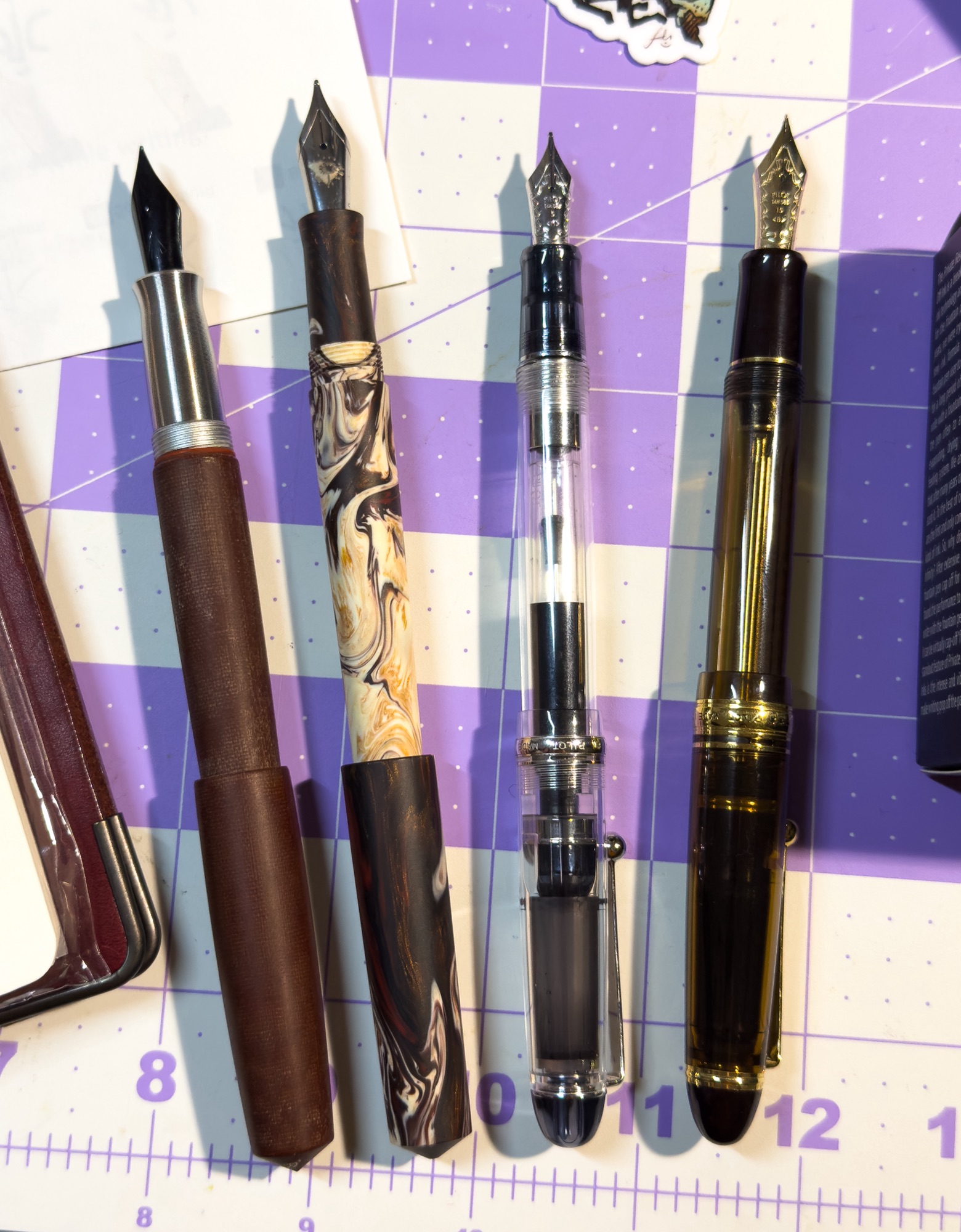
After spending a short while perusing the wide assortment of pens on offer from the Carolina Pen Company, I landed on this beautiful matte finish slim Charleston. The pen comes with an engraved #6 Jowo nib, a Schmidt converter, and a Carolina Pen Co. sleeve by Rickshaw Bagworks. I chose this pen because it reminds me of my other vice: coffee. The pen looks so much like an iced coffee with a heapin’ helpin’ of oat milk, you’d think I had it commissioned myself.
Karas Pen Co. Ultra Black Modal
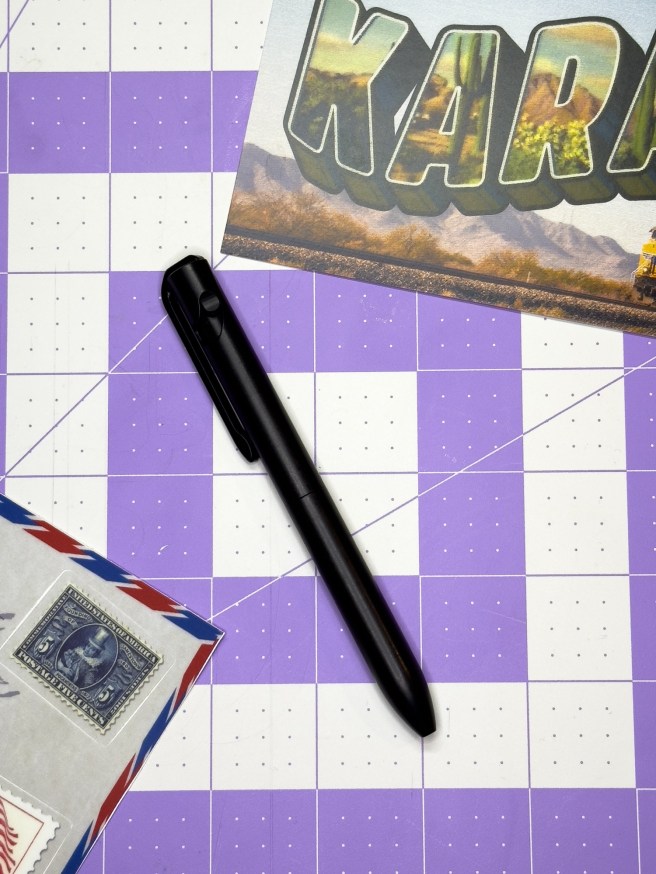
We all know I’m a Karas fanboy. I’ve been eying their latest release since it hit the newsletters a short while ago and, knowing I’d see them in person as soon as this pen show came around, I managed to stay strong and not order one. The Modal offers a uniquely Karas take on the typical “bolt action” pen type. It features a straight aluminum barrel housing the Pilot G2 refill, with an Ink-esque metal clip, and a black Delrin slider. The bolt mechanism itself is slightly convex, providing easy movement that is also quite comfortable. I ended up choosing the blacked out Modal model, but the Ultem version was a very close second. If (or when) Karas Pen Co. starts messing with their unique grip styles for this pen, I’ll probably add another to the collection. Pro Tip: If you shave about half a millimeter off the Uni-Ball One refill, it’ll fit perfectly into this pen.
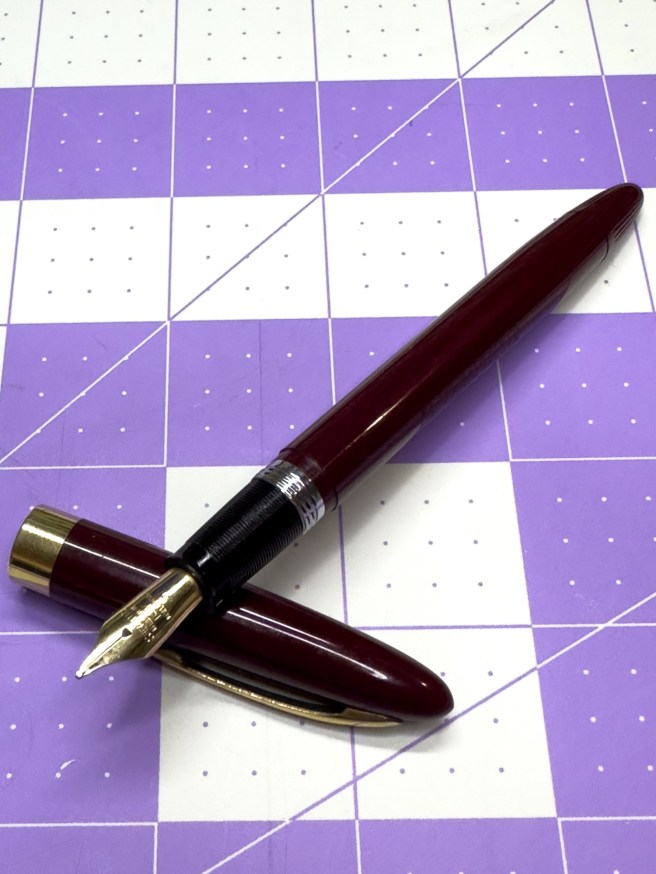
Sheaffer Snorkel from Hirsch Davis
I don’t generally use vintage pens. They can be temperamental, requiring special knowledge and unique parts to repair and service should the need arise. The Snorkel, however, is such an interesting mechanism that I had to have one in my collection. The Snorkel series uses the same essential filling mechanism as the Touchdown series from the same manufacturer. The pens feature an internal ink sac that uses the vacuum pressure generated by the telescoping barrel to force ink into the pen. What makes the Snorkel stand out is the small retractable tube (or snorkel, if you like) that can be dipped into an inkwell or bottle to refill the pen, rather than submerging the whole nib and part of the grip. The pen was introduced in the 50’s to offer a mess-free filling experience, and demonstrate the company’s cutting edge technology. For whatever reason, perhaps increased cost of manufacturing or an elevated rate of failure for the relatively complex device, the Snorkel didn’t make it out of the decade. Luckily there are several vintage pen dealers at shows like CAPS who almost certainly have some restored and ready for sale. After a lovely conversation about the ups and downs of cat cohabitation with Mrs. Davis, I purchased this great little burgundy Snorkel from Hirsch.
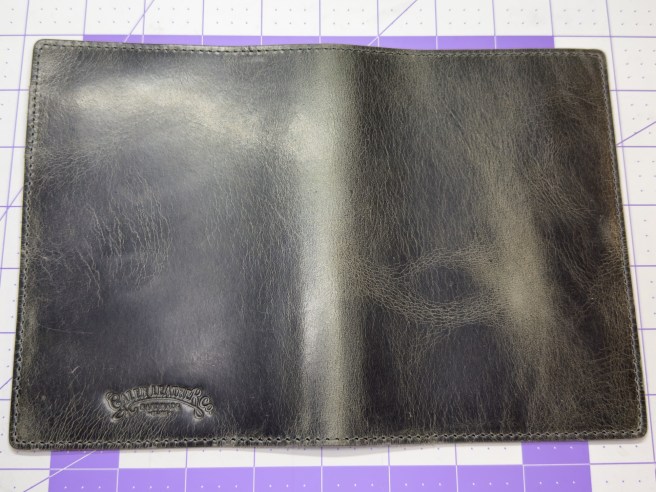
Galen Leather Slim A6 Cover
Okay, cards on the table, this one was a bit of an impulse buy. I’ve been a fan of Galen Leather for a few years now: I have their A5 Zipper Folio in a beautiful grey leather, an undyed Slim A5 cover in use at this very moment, and a couple of other leather folders I purchased during a “seconds sale.” Since they brought their beautiful work all the way to California, I figured I should at least stop by and take a look. Once I did, this case jumped out at me almost right away. It’s a simple slim cover for A6-size notebooks that works particularly well with Hobonichi Techo-like books with thin covers. The leather is dyed in the same “Crazy Horse Smokey” grey as my A5 folio, and it both looks and feels absolutely incredible. The quality and craftsmanship of Galen Leathers’ work is simply beyond comparison. If you’re looking for a new leather stationery accessory, start there.
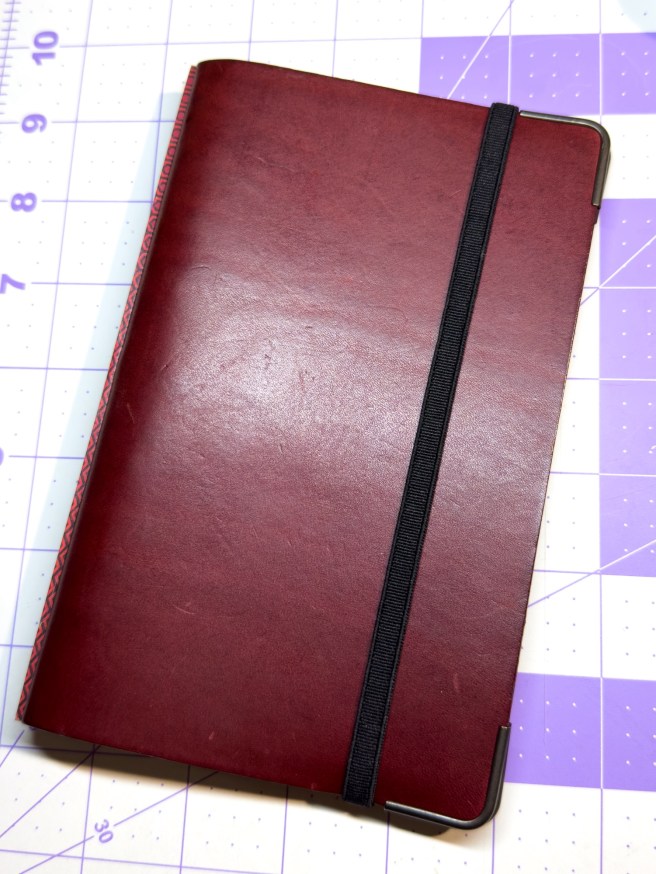
Plotter Corner Customization & Letterpress Refill
Plotter almost got me again, I’ll be honest. I can only assume that they were mobbed in previous days, but on Sunday the Plotter Customization Event was available without any sort of appointment or wait list. While I was incredibly tempted by their new limited leathers, I ultimately chose to customize my own Bible-sized binder with black corner pieces. It’s a nice added visual touch to an accessory I use every day. Perhaps more aesthetic than functional, but well worth the fairly low price to add it on.
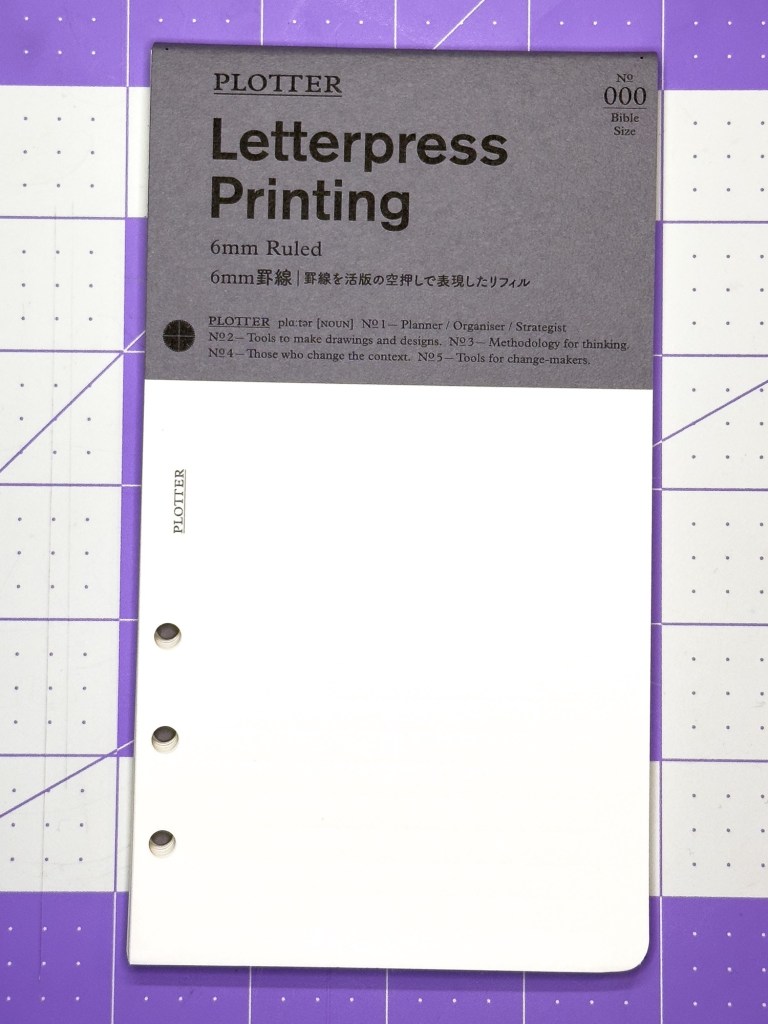
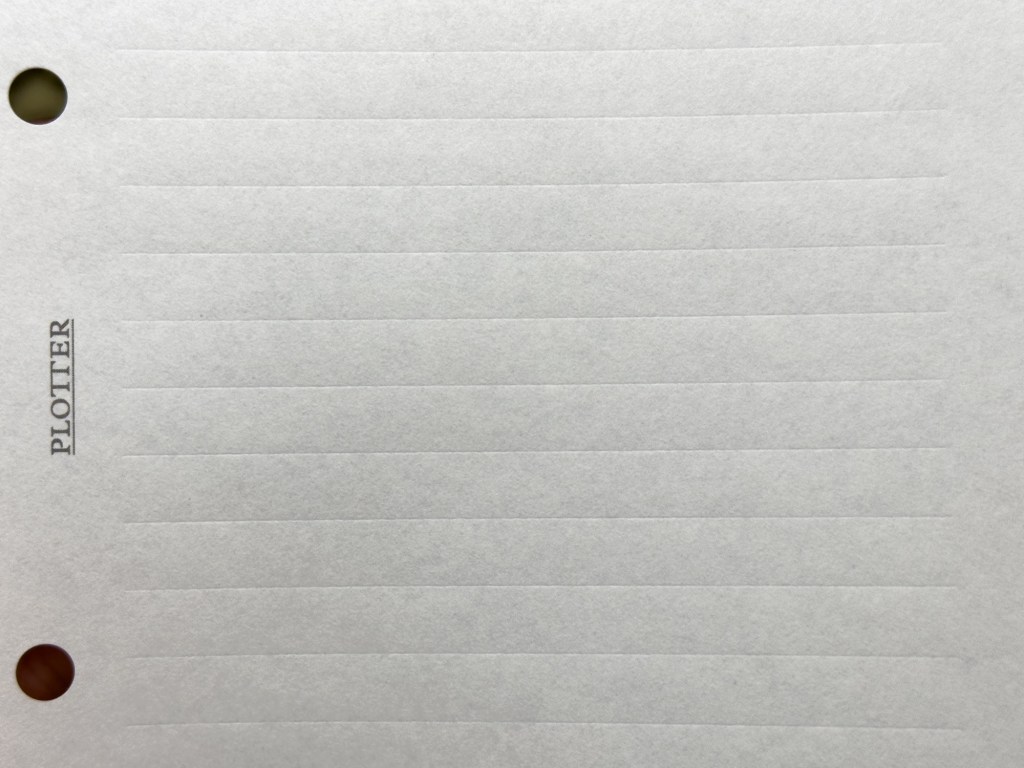
I also opted to pick up a pack of their Letterpress Refill paper in the Bible size. This paper uses standard Designphil paper present in other Plotter, Travelers Company, and Midori products, but features a subtle letterpress lined formatting. It’s a standard paper refill pack, but elevated.
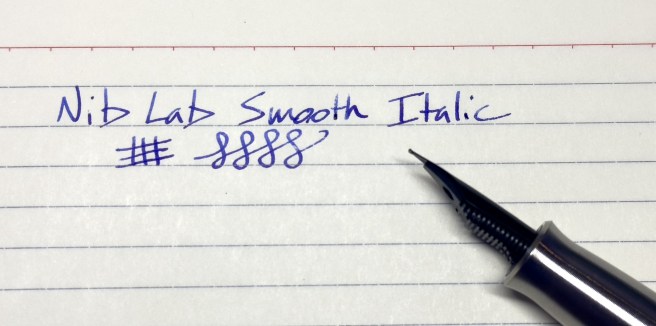
Italic Grind by Nib Lab
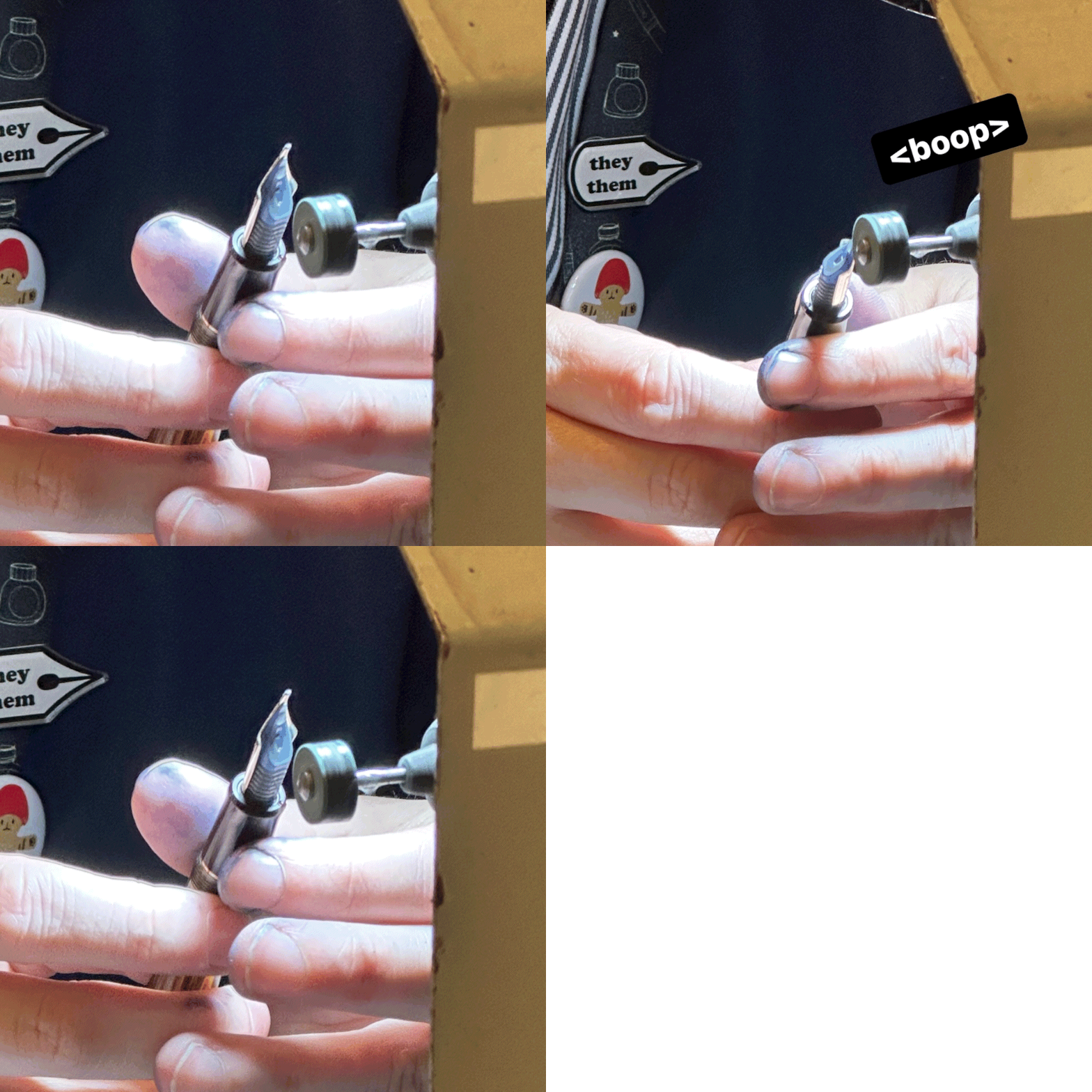
Jose Munuera (aka Nib.Lab on IG) is a “nib scientist” based in Spain who set up a small space at CAPS while on his first ever trip to the United States. Perhaps inspired by his positioning right next to the Gravitas Pens table, I handed over my stock Micarta and asked for a smooth italic grind. About twenty minutes later, I had a new nib and Jose had another satisfied customer. Part of what I love about visiting nib grinders at pen shows is watching them work, and it was truly fascinating to see Jose work with little more than a battery-powered rotary tool and a few sheets of mylar and micro mesh. I also had time to take a look at some examples of his experiments with stacked nibs, which are an area of growing curiosity for me. Nib.Lab is based in Spain, so it might be a bit of a stretch for US-based pen addicts to seek out his work for nib customization, but anyone on his side of the Atlantic should give his work a look.
Journaler, Smooth Italic, and Reverse Architect Grinds from Custom Nib Studio
Gena Salorino is the proprietor of Custom Nib Studio and a person of immense skill. For the past two pen shows (as a result of my own personal inattention to detail) I missed out on booking time at Gena’s table, but not this year. I set an alarm to remind me and, when the time came, I booked a thirty minute session for work at CAPS. All remaining time slots were gone within five minutes, but I was on the schedule.
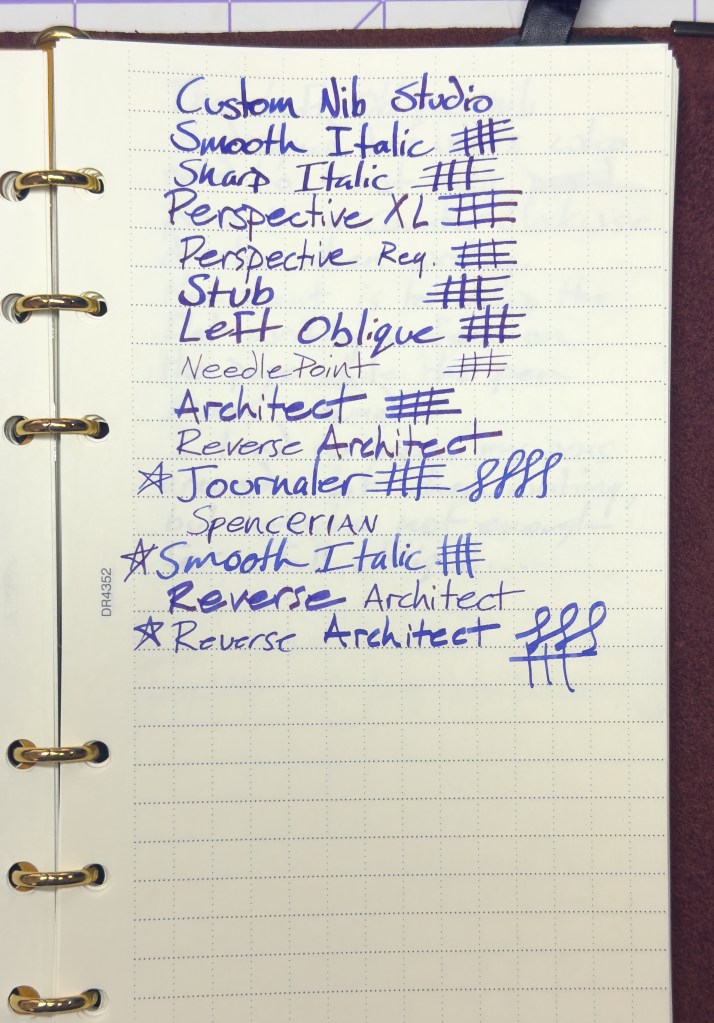
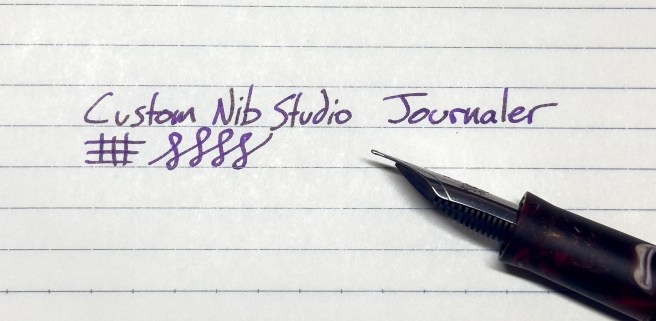
I had plans for two nib grinds when I sat down at Gena’s table, but it turns out there was time for three. The Journaler grind has been a favorite of mine since I had one applied to a medium Kaweco nib some time ago. It is also a grind that Gena created, and one they can reproduce with shocking speed and accuracy. The Journaler is somewhere in the neighborhood of a stub or italic, giving a wider vertical line with narrow cross strokes, but it feels more natural at the point of contact with the page. Almost as though the nib still has a stock rounded tipping. I had the this grind applied to my new Carolina Pen Co. pen’s #6 nib because I have several other pens into which that nib will fit, should the mood strike.
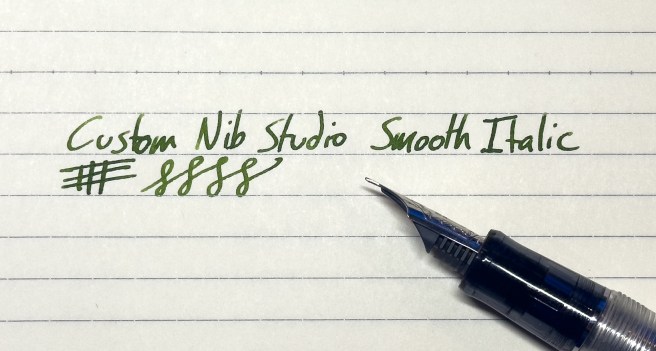
After that I requested a Smooth Italic grind for my medium Pilot Custom 74. I picked this pen up a while ago. It’s a great piece, well made, but in truth a little bland. The Smooth Italic is similar to the Journaler, but a bit more traditional. It offers a decent amount of line variation between the horizontal and vertical strokes, but is much more user-friendly than standard Italics. This grind gives the pen a much-needed refresher and provides a far more expressive writing experience than a standard Medium.
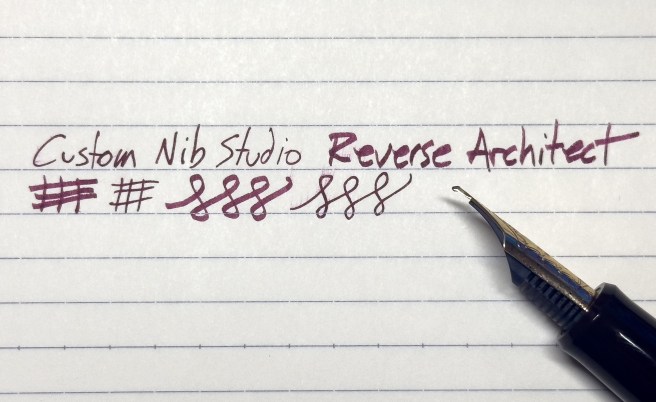
Those were the only grinds I had planned on getting, but I still had about fifteen minutes left in my appointment. I happened to bring my new Pilot Custom 823 to the show with the intention of having a professional diagnose some scratchiness I was feeling. So I pulled that one out of the case, handed it over to Gena, and yada yada yada, I got a Reverse Architect grind on that one. This grind is pretty much exactly what it sounds like. The normal writing section of the nib is narrowed to a fine-ish point, and the reverse side is flattened and shaped into an Architect point that makes narrow vertical lines with wider horizontal ones. The Journaler grind is still my favorite “daily driver” type nib, but the Reverse Architect is by far the coolest.
Private Reserve Infinity Inks (Freebies)
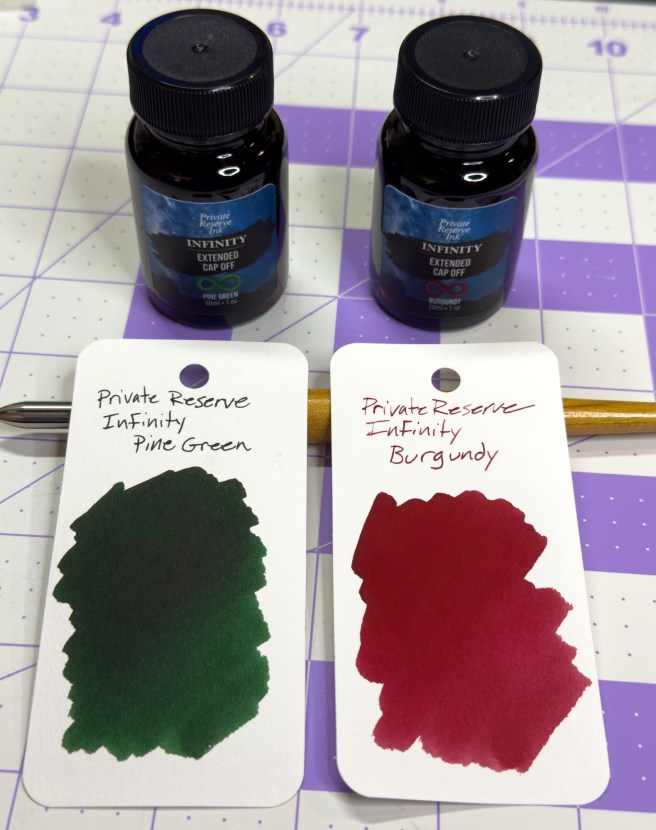
The Private Reserve Infinity ink line was recommended to me by a reader after my recent assessment of some capless fountain pens. The ink was designed to resist drying out in the nib during extended cap-off periods which sounds pretty ideal for the handful of retractable pens in my collection. The Infinity Inks were also one of the few inks I had on my show shopping list, but I was disappointed to find that they were not on any vendor’s table. Except Yafa’s. This makes sense, they are the US distributor for the brand after all. But what I was not expecting was for them to be giving it away for the low price of an Instagram follow, a price I had already paid. Thanks to my lovely partner, I was able to bring home two bottles of the stuff in the Pine Green and Burgundy colors. I plan on running a full battery of comparative tests once my “currently inked” list is back in the single digits. Stay tuned.
Monteverde Impressa (Raffle Prize)
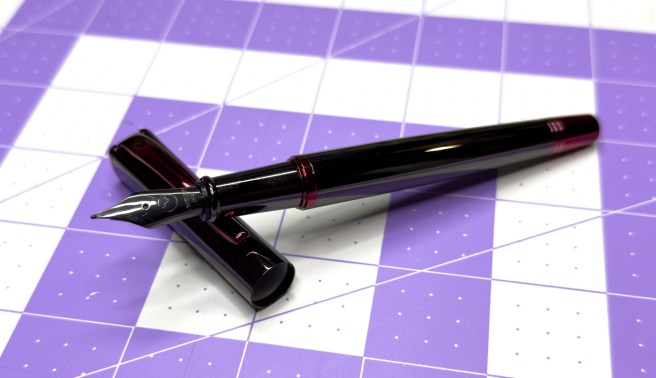
This one was another surprise pickup. The Yafa Brands booth was generously hosting a raffle on site and I happened to win the fourth and final prize of the draw. The Monteverde Impressa is an interesting pen. Square at the top, round throughout the body, and a shiny gunmetal finish with red metallic accents. I might give this one a shot, but it isn’t quite my style these days. More than likely I’ll be giving this one away in some form or another before too long.
The Pilot Handwriting Analysis
Pilot Corp. brought the whole crew out for this one. Not only did they set up a beautiful display featuring their range of fine writing tools from all across the spectrum, they also brought some science to the show. The handwriting analysis consists of a simple test; The participant is given a pen and told to write their name in a box. This box is situated over a pressure-sensitive pad that feeds information back and is able to determine the precise specifications of that writing sample. As you can see in my results, the device tells you the writing angle, degree of rotation, and writing pressure. The program then takes that information and issues a recommendation for what kind of Pilot nib would work best.
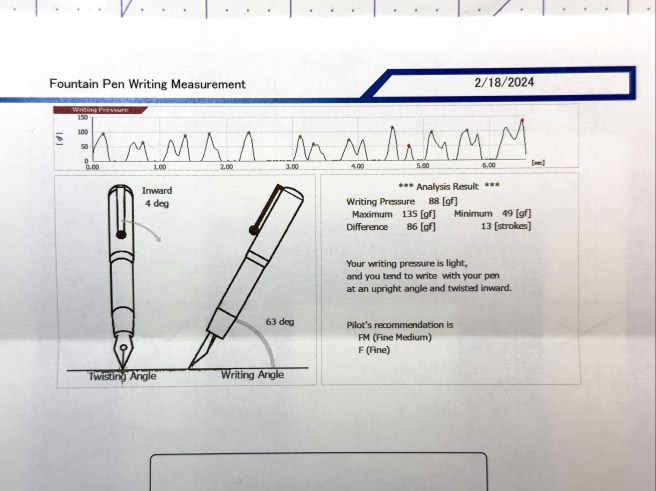
I think this is a really cool experience to have at a pen show, and I highly recommend you check it out if you ever have the chance. I was surprised with the somewhat lower than average writing pressure I exhibited for the analysis, but I believe this is a result of writing with other people’s pens. As much as I pamper my own pens, if I have someone else’s property I’m going to take extra care while using it. My normal writing pressure is likely slightly higher than reported here, but I have also lightened up over the years as I have become more accustomed to fountain pens.
The Takeaways
If I can pass on just one piece of information to you with this post, let it be that Sunday is the best day to go to a pen show. I really enjoyed just casually walking around the show without feeling like I was pushing through a crowd or swimming upstream. Something I would love to see implemented at the California Pen Show are ink testing stations like the ones seen at the San Francisco show. These stations typically provide a few hundred inked pens, spread across the show floor, offering the opportunity to test out inks in practical writing conditions. Not only is this much more informative to an ink’s characteristics in every day use, it also allows users to see what an ink will look like with their paper of choice. I imagine those stations are a logistical nightmare to maintain, but including them in future shows would bring a fun experience to attendees.
 The Poor Penman
The Pilot writing analysis sounds intriguing. I also write with light pressure, (I think), and would love to try some of the higher end Pilot pens to decide which nib and pen is right for me. I have an Elite, several Metropolitans, a Kakuno, and even a disposable Varsity, and Pilot is my favorite brand. I suspect a custom grind would be amazing, too.
LikeLike
looks like a good time was had. The Handwriting analysis is way cool. Afterwards they would simply take the pen from me and give me a G2 is the pen for you (LOL).
LikeLike